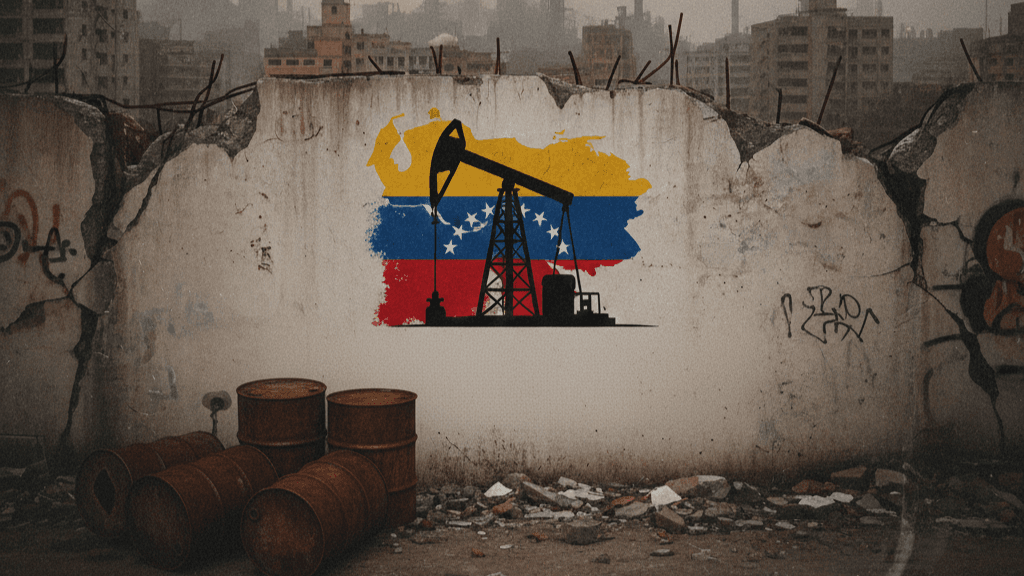
Over the weekend, Venezuela moved from “background risk” to front-page news.
A U.S. military operation reportedly resulted in the capture of President Nicolás Maduro, abruptly ending years of political stalemate and throwing the country’s future into question. For global markets, this is not just a political story. It is an energy story, a risk story, and a reminder that geopolitics still matter in very real ways.
As markets reopen, investors will be trying to answer one simple question: what does this actually change?
What happened in Venezuela, in plain English
According to multiple reports, U.S. forces carried out a coordinated operation inside Venezuela that led to the arrest of Nicolás Maduro and his wife. The White House framed the move as a security and stability measure, while international reactions ranged from cautious support to outright condemnation.
Venezuela, despite years of economic collapse, remains one of the most resource-rich countries in the world. It holds the largest proven oil reserves globally. That fact alone makes any sudden political shift there relevant to markets far beyond Latin America.
This is why traders are not just watching headlines. They are watching oil, currencies, and risk sentiment.
Why markets care so much about Venezuela
When people talk about the Venezuela crisis impact on markets, they are really talking about three things.
First is oil. Venezuela’s economy is built on crude exports, and any disruption or future restructuring can ripple through global energy supply chains.
Second is geopolitical risk. Sudden regime change adds uncertainty, and markets tend to dislike uncertainty more than bad news.
Third is precedent. Investors watch how major powers act, because it shapes expectations around future conflicts and interventions.
Put together, Venezuela becomes more than a regional issue. It becomes a global signal.
Energy markets are the obvious pressure point
Oil is where attention usually goes first, and for good reason.
Venezuelan crude plays a specific role in global refining, particularly for heavy grades used in diesel and jet fuel. Even the possibility of production disruption can push oil prices higher, at least temporarily.
Early trading indicators suggest that oil markets may open with a cautious upward bias rather than a sharp spike. That reflects a belief that global supply remains adequate for now, but also that risk has clearly increased.
Energy companies tend to benefit when oil prices rise, even modestly. That does not mean prices will surge, but it does mean energy stocks could see renewed interest as traders reassess supply risk.
Defense stocks and the risk narrative
Whenever military action enters the picture, defense-related companies tend to show up on investor radars.
This is not because investors expect immediate revenue changes, but because geopolitical tension often leads to higher defense spending over time. Markets price expectations, not just current earnings.
That said, any early moves in defense stocks are likely to be sentiment-driven rather than fundamental. Younger readers should understand that these reactions are often short-term and based on perception, not confirmed policy shifts.
Which parts of the market could feel pressure
Not all assets respond well to geopolitical shocks.
Broader equity markets often turn cautious when uncertainty rises. Investors may reduce exposure to riskier assets, particularly those tied to global growth or emerging markets.
Countries with economic or political ties to Venezuela could experience currency or equity pressure if tensions escalate. Even companies with no direct exposure can be affected if risk appetite declines across the board.
This is how geopolitics spreads through markets. Not through one stock at a time, but through sentiment.
Gold and silver are back in the conversation
When uncertainty rises, investors often look to assets that are perceived as stores of value.
Gold usually responds first. It has a long history as a hedge during political and economic stress. Silver often follows, though with more volatility because it also has industrial demand.
In the context of the Venezuela crisis impact on markets, both metals could see renewed interest. Gold tends to benefit from fear. Silver benefits when fear overlaps with broader inflation or energy concerns.
That does not mean prices will move in a straight line. It does mean these markets will be watched closely in early trading.
What to expect when markets open
Markets rarely react in one clean direction after a geopolitical shock.
Instead, Monday is likely to open with higher volatility. Energy and defense-related names may see interest. Broader indices could hesitate as investors process new information. Safe-haven assets may catch bids as uncertainty is priced in.
The key thing to understand is that markets move gradually as information becomes clearer. Initial reactions often soften once traders separate headlines from long-term impact.
What young investors can learn from this moment
This is not about predicting what will go up or down.
It is about watching how different parts of the market respond to uncertainty. Oil reacts differently than tech. Gold behaves differently than equities. Sentiment matters as much as data, especially in the short term.
Understanding those relationships is more valuable than reacting emotionally to breaking news.
Final takeaway: geopolitics still moves markets
The Venezuela crisis impact on markets is a reminder that politics, energy, and finance are deeply connected.
Markets will not panic forever, and they rarely move in straight lines. But they do reprice risk when the world changes unexpectedly.
Watching how markets digest this moment is less about finding winners and losers, and more about understanding how uncertainty flows through the financial system.
That understanding is what separates noise from insight.