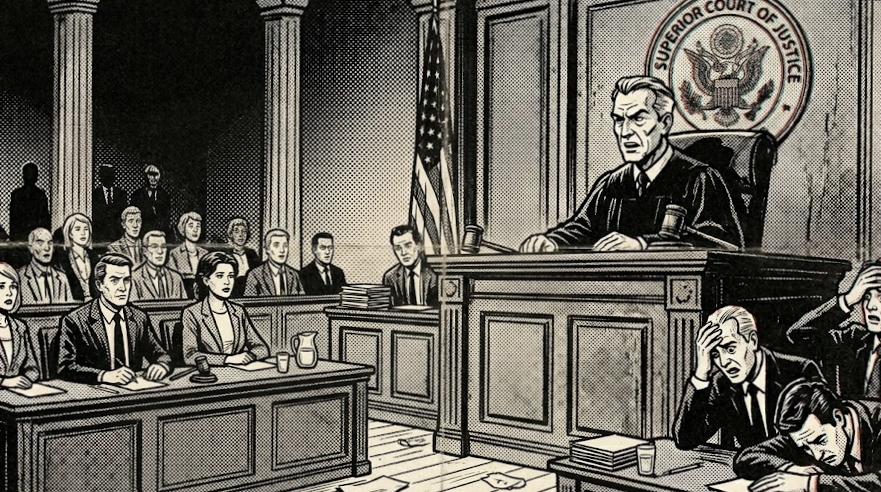
Jury selection started Monday morning in the case where Musk alleges that OpenAI abandoned its original non-profit mission to become a “closed-source de facto subsidiary” of Microsoft. The timing is critical. Just last week, internal memos revealed OpenAI is moving to convert into a Public Benefit Corporation, a legal maneuver designed to strip away non-profit oversight and clear the path for a massive IPO later this year. Musk’s lawsuit is the primary roadblock to that trillion-dollar payday.
The core of the case rests on whether a “founding agreement” existed that legally bound OpenAI to remain a non-profit. Musk is seeking to force the company to return to its open-source roots and is demanding the removal of CEO Sam Altman and President Greg Brockman. For investors, the “smoking gun” evidence arriving this week includes unsealed diary entries from Brockman, which allegedly show the leadership team plotting a pivot to for-profit status as early as 2017. If the jury finds that Altman and Brockman acted in bad faith, it could trigger a court-ordered unwinding of the partnership with Microsoft.
The financial stakes extend far beyond OpenAI. Microsoft has invested an estimated $13 billion into the startup, securing a 49% stake in its for-profit arm and exclusive access to the models that power its “Copilot” AI software. A victory for Musk could see that partnership severed or the technology forced into the public domain. This would instantly erase Microsoft’s competitive moat and benefit rivals like Alphabet $GOOGL and Meta $META, who have long advocated for more open AI development.
What to watch next: Elon Musk is expected to take the stand as early as Tuesday, followed by Satya Nadella and Sam Altman. Any testimony that suggests OpenAI’s technology has achieved “AGI”—artificial general intelligence—could be the “kill switch” for the Microsoft deal. According to their contract, Microsoft’s license to the technology expires the moment AGI is reached, as the non-profit mission is supposed to take over. If the trial proves OpenAI is hiding its true capabilities to keep the profits flowing, the market’s AI valuation will be fundamentally rewritten by the end of May.
The Street Editor’s Take:
I think most investors are treating this like a soap opera when they should be treating it like a systemic risk. My read is that even if Musk only wins a partial victory, the discovery process will expose enough internal mess to delay the OpenAI IPO indefinitely. I see this as a major “bear case” for Microsoft in the short term. If a judge forces OpenAI to open its “black box,” the massive premium we’ve been paying for $MSFT’s AI lead could vanish overnight. Pride might be driving Musk, but the fallout will hit your portfolio.