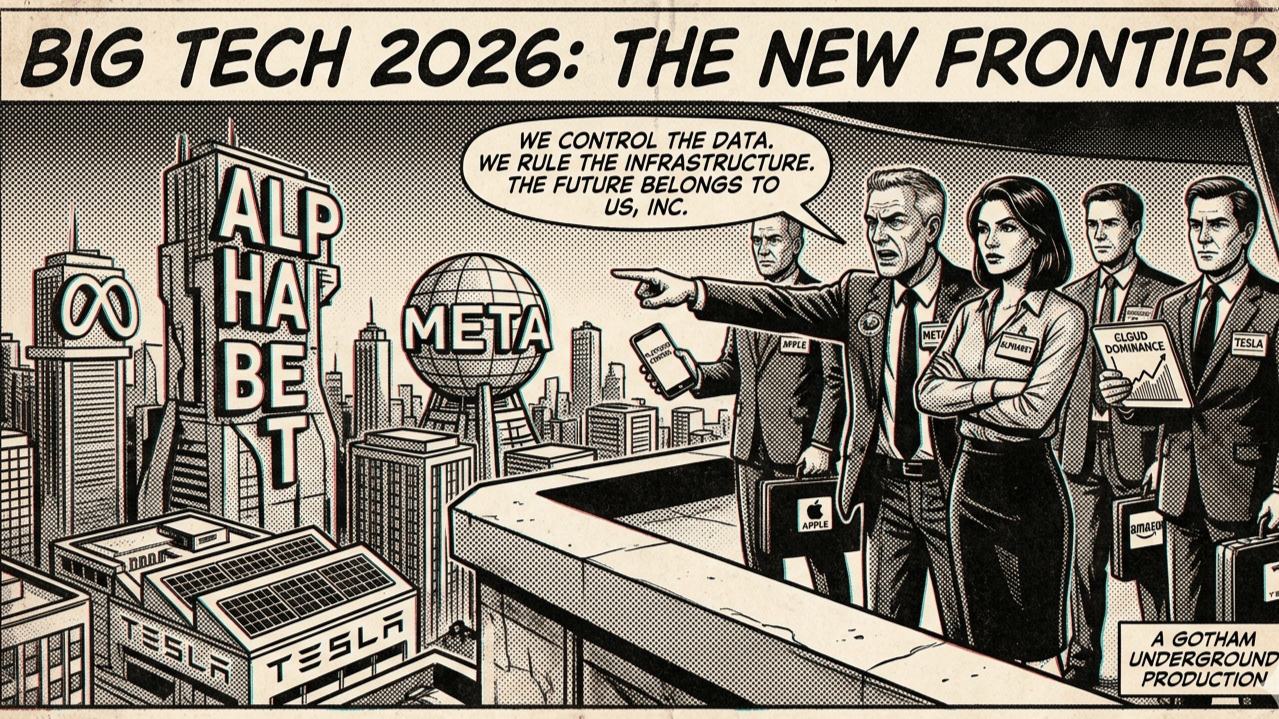
The “Big Four” technology giants released a wave of quarterly results this Wednesday that confirmed the AI era is no longer a theoretical experiment; it is now a massive, industrial-scale construction project. Alphabet led the charge with revenue climbing 22% to $109.9 billion, fueled by a Google Cloud segment that finally crossed the $20 billion mark. Microsoft mirrored this success, reporting that its Azure cloud revenue rose 18.3%, beating analyst estimates as enterprises flock to its Copilot AI tools. However, the celebration was short-lived as the focus shifted from what these companies earned to what they are forced to spend.
The investor anxiety is centered on capital expenditure, or “capex”—the money spent on physical assets like the advanced chips and massive data centers required to run AI. According to current market projections, the industry is now on track to spend $725 billion this year alone, a significant jump from previous estimates. Meta Platforms felt the sharpest sting from this shift; despite beating earnings expectations, its stock dropped 7% after hours when the company raised its capex guidance to as high as $145 billion. Wall Street is starting to worry that these companies are trapped in a “prisoner’s dilemma” where they must spend billions just to keep up with each other, even if the immediate profit from that spending is unclear.
This creates a high-stakes environment for the rest of 2026. The primary risk is “margin compression”—the danger that while revenue goes up, the cost of the hardware goes up even faster, leaving less profit for shareholders. We are moving away from the “hype phase” where simply mentioning AI boosted a stock price. Now, the market is demanding a clear “return on investment” (ROI). If a company cannot prove that its expensive new data centers are bringing in new, paying customers, their stock is likely to be revalued as a low-margin utility rather than a high-growth tech leader.
The next date to circle is the release of the Federal Reserve’s PCE inflation gauge later this week. Because Big Tech now represents such a massive portion of the stock market, any sign that higher interest rates will make this $725 billion spending spree more expensive could trigger a broader sell-off. Watch the “cloud backlog” numbers in the upcoming 10-Q filings; if those numbers start to slide while spending stays high, the AI bubble may finally face its first real leak.
The Street Editor’s Take:
The way I see it, the market is finally growing up, and it’s about time. For the last two years, we’ve been valuing these companies on “AI vibes,” but $725 billion is too much money for vibes. My read is that Meta is the “canary in the coal mine” here. Mark Zuckerberg is essentially telling us that the AI transition is going to be longer, more expensive, and more painful than the bulls want to admit. I think Alphabet and Microsoft are currently hiding behind their legacy advertising and software monopolies, which masks how much they’re actually bleeding on the AI side.
I’m personally stepping back from the “buy every dip” mentality for Big Tech right now. When you see $GOOGL increasing its dividend while simultaneously forecasting $190 billion in spending, that’s not a sign of strength — it’s a bribe to keep investors from looking too closely at the bill. The credibility of the AI trade is now pinned entirely on whether AWS and Azure can turn all that expensive silicon into actual cash flow by the end of the year. If they don’t, the correction will be historic.
Not financial advice. Always do your own research before making investment decisions.